Generalized Anxiety Disorder Specialist in Reston, Virginia
Expert Psychiatric Care for Chronic Anxiety Across Virginia
Understanding Generalized Anxiety Disorder and Anxiety Treatment in Virginia
Generalized Anxiety Disorder (GAD) is a recognized anxiety disorder that affects how individuals think, feel, sleep, and function- often for months or years at a time. Occasional worry is part of everyday life, but when anxiety becomes constant, excessive, and difficult to control, it may indicate GAD.
At Comprehensive Psychiatry in Reston, Virginia, Generalized Anxiety Disorder is evaluated and treated by Dr. Imran Akram, MD, a board-certified adult and geriatric psychiatrist. Care is focused on accurate diagnosis, symptom stabilization, and long-term management using evidence-based psychiatric treatment. Services are available in Reston and statewide through secure telepsychiatry.

What Is Generalized Anxiety Disorder?
Generalized Anxiety Disorder is characterized by excessive, uncontrollable worry about a variety of everyday concerns, often lasting six months or more and significantly interfering with daily functioning.
According to NIMH- National Institute of Mental Health, Generalized anxiety disorder (GAD) is characterized by persistent, excessive anxiety and worry about a number of events or activities that is difficult to control.
People with GAD may describe their mind as “always racing” or feeling constantly on edge. Anxiety may be present most days and can interfere with concentration, decision-making, sleep, and emotional well-being. Because symptoms often overlap with depression, panic disorder, or medical conditions, professional psychiatric evaluation is essential.
Common Symptoms of Generalized Anxiety Disorder
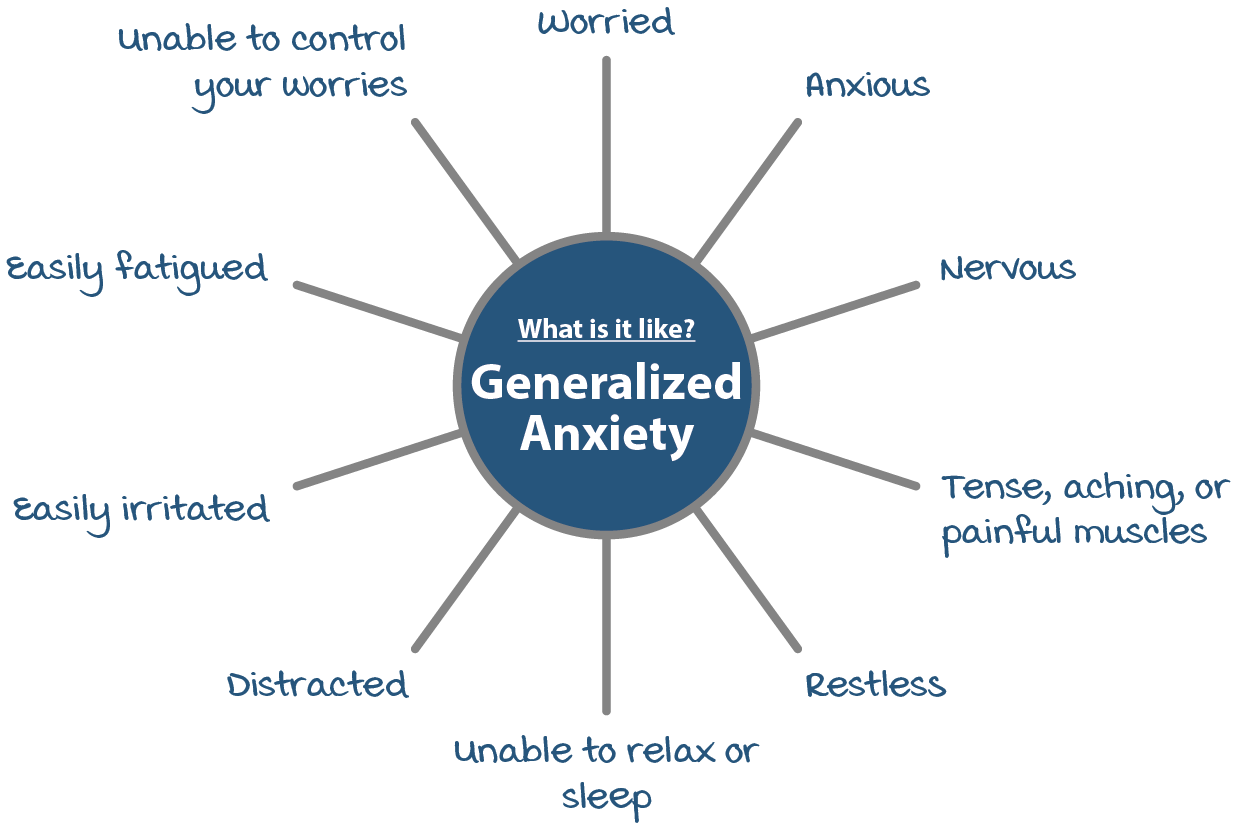
Individuals searching for anxiety symptoms or chronic worry often experience a combination of emotional and physical signs. These may include excessive worry, restlessness, irritability, muscle tension, fatigue, difficulty concentrating, sleep disturbances, and a persistent sense of unease or fear.
Symptoms may fluctuate in intensity but tend to persist over time. When anxiety begins affecting work performance, relationships, or overall quality of life, psychiatric care can provide clarity and relief.
What Causes Generalized Anxiety Disorder?
Generalized Anxiety Disorder develops through a combination of factors rather than a single cause. These may include genetic vulnerability, changes in brain chemistry, prolonged stress exposure, trauma, personality traits, and medical or hormonal influences.
In many cases, anxiety gradually builds over time and becomes ingrained in daily functioning. Identifying contributing factors allows treatment to be more precise and effective, rather than relying on short-term coping strategies alone.
Can a Psychiatrist Treat Generalized Anxiety Disorder?
Yes. A psychiatrist is uniquely trained to diagnose and treat anxiety disorders, including GAD. Psychiatrists are medical doctors like Dr. Imran Akram, MD in Virginia can evaluate both psychological and biological contributors to anxiety, prescribe and manage medications, and monitor progress over time.
Many patients search for an anxiety psychiatrist or wonder whether therapy alone is enough. For individuals with persistent, moderate to severe anxiety, or anxiety that has not responded to prior treatment- psychiatric care plays a central role in long-term management.
Our Approach to GAD Treatment and How We Can Help?
Comprehensive Psychiatric Evaluation
Treatment begins at Comprehensive Psychiatry in Reston, Virginia with a detailed psychiatric assessment that looks beyond surface symptoms. Dr. Akram carefully evaluates anxiety patterns, duration, triggers, sleep quality, medical history, and co-occurring conditions such as depression or panic disorder.
This thorough approach helps ensure an accurate diagnosis and prevents mislabeling anxiety as stress alone. Many patients seek care after feeling overlooked or inadequately treated elsewhere; our focus is precision and continuity.
Medication Management for Chronic Anxiety
Medication can be an important component of treatment for Generalized Anxiety Disorder. Prescribing decisions are individualized, based on symptom severity, prior medication response, side effect profile, and overall health.
Medication management includes careful selection, dosage adjustments, and ongoing follow-up to ensure treatment remains effective and well-tolerated. The goal is symptom control without unnecessary medication burden.
Psychotherapy and CBT Integration
For many patients, treatment also includes psychotherapy recommendations, particularly Cognitive Behavioral Therapy (CBT). CBT helps individuals recognize and modify thought patterns that fuel chronic worry and anxiety.
When combined with psychiatric care, therapy can strengthen coping skills, improve emotional regulation, and reduce relapse risk. Treatment planning is collaborative and tailored to each patient’s needs.
Anxiety Treatment From Home Anywhere in Virginia
Comprehensive Psychiatry provides secure telepsychiatry services across Virginia, allowing patients to receive expert care for anxiety disorders without travel or long wait times. Virtual appointments follow the same medical standards as in-person visits and offer privacy and convenience.
Telepsychiatry is especially beneficial for professionals, older adults, and individuals whose anxiety makes travel or scheduling difficult.
Also, Treating Anxiety and Co-Occurring Conditions
Generalized Anxiety Disorder frequently occurs alongside depression, panic disorder, insomnia, or stress-related conditions. Effective care addresses the full clinical picture rather than treating symptoms in isolation.
Patients often ask how to reduce anxiety long term. While anxiety cannot always be eliminated entirely, comprehensive psychiatric care can significantly reduce symptom intensity, improve functioning, and restore emotional balance.
Why Patients Trust Comprehensive Psychiatry for Anxiety Care in Virginia
Patients choose Comprehensive Psychiatry for consistent, physician-led care. Dr. Akram brings over 11 years of experience treating anxiety disorders, along with leadership roles in community mental health systems and a commitment to education and outreach.
Patients frequently report feeling heard, respected, and supported throughout treatment. Care emphasizes thoughtful evaluation, continuity, and realistic, evidence-based treatment planning.
Serving Reston and All of Virginia
Psychiatric services are based in Reston, VA, serving nearby communities including Herndon, Vienna, Fairfax, Tysons, Ashburn, Arlington, Alexandria, and Loudoun County. Through telepsychiatry, anxiety disorder treatment is available to patients throughout Virginia.
Schedule a Confidential Anxiety Evaluation
If persistent worry, tension, or anxiety is affecting your daily life, a professional psychiatric evaluation can provide clarity and direction. Effective, evidence-based care for Generalized Anxiety Disorder is available.
Schedule a confidential appointment with Dr. Imran Akram, MD, and take the next step toward managing anxiety with expert psychiatric care.